Navigating Divorce: Divorce Recovery Therapy Group
Divorce can affect far more than a relationship. It can change your routines, family dynamics, sense of stability, plans for the future, and even the way you see yourself.
You do not have to wait until a divorce is finalized to begin processing what you are going through.
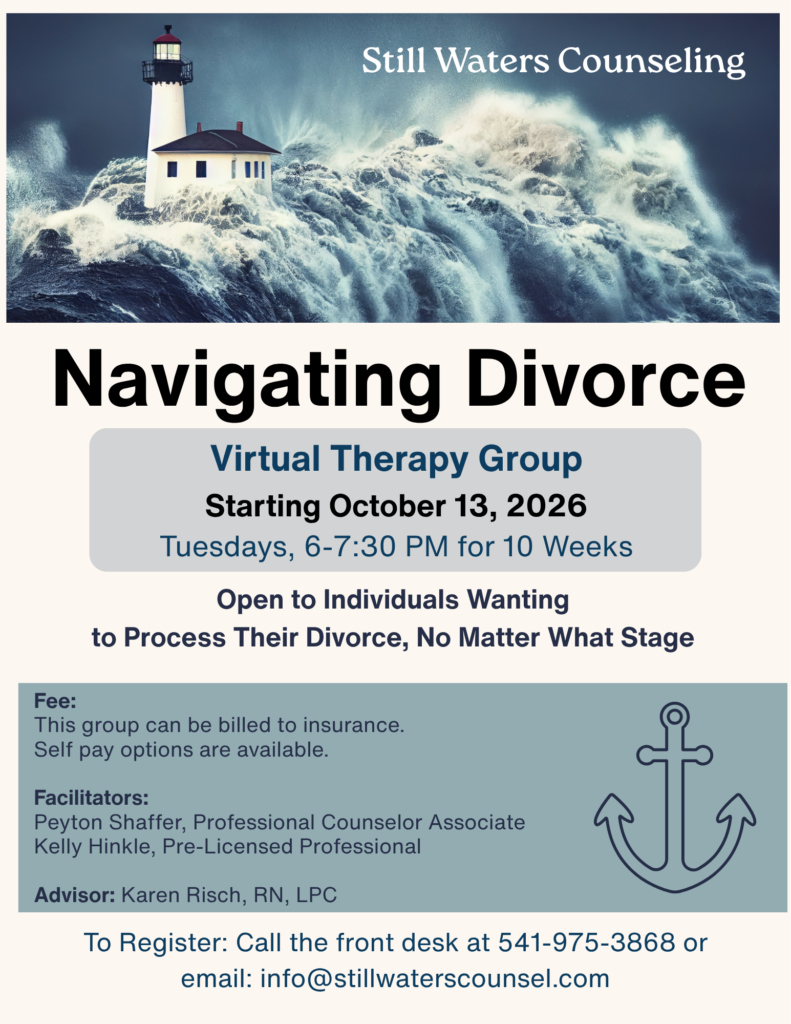
Navigating Divorce is a 10-week virtual divorce recovery therapy group from Still Waters Counseling for individuals who want a structured space to process divorce, understand the emotions and changes that come with it, and move forward with greater clarity.
The group welcomes people at different stages of divorce, from separation and the legal process to adjusting to life after divorce.
Sessions are held virtually on Tuesdays from 6:00 PM to 7:30 PM, beginning October 13, 2026.
Who
Adults at Any Stage
When
Tuesdays
6:00–7:30 PM
Where
Virtual in Oregon
Format
Therapist-Led
10-Week Group
Who Is the Navigating Divorce Therapy Group For?
Navigating Divorce is designed for individuals who want help processing divorce, regardless of where they currently are in the process.
The group may be appropriate for someone who is:
✓ Considering or beginning the divorce process
✓ Recently separated from a spouse
✓ Currently going through a divorce
✓ Adjusting to changes in family or household routines
✓ Experiencing grief, anger, sadness, anxiety, or uncertainty
✓ Working through changes in identity or future plans
✓ Learning to adapt to life after the end of a marriage
✓ Feeling isolated during the divorce process
✓ Trying to understand difficult emotions
✓ Looking for a structured space to process what comes next
You do not have to be at a particular stage of divorce to participate. One goal of Navigating Divorce is to create space for people whose experiences and timelines may look different from one another.
What Is Divorce Recovery Therapy?
Divorce recovery therapy focuses on the emotional and psychological changes that can happen during and after the end of a marriage.
Divorce may involve grief, uncertainty, anger, sadness, relief, fear, changes in identity, parenting concerns, financial stress, or questions about what comes next. Several of these emotions can exist at the same time, and there is no single “right” way to respond.
Therapy provides a place to explore those experiences rather than feeling pressure to move on before you are ready.
In a divorce recovery therapy group, participants can also hear different perspectives and recognize that many of the thoughts and emotions they are experiencing are shared by others navigating similar transitions.
You can also learn more about the other therapy groups.
Divorce Recovery Is Different for Everyone
There is no standard timeline for recovering from divorce. Some people experience intense emotions early, while others begin struggling months later.
Relief and sadness can exist together. You can believe divorce was necessary and still grieve the relationship. Navigating Divorce meets participants where they are instead of expecting everyone to follow the same path.
Navigating Divorce Group Schedule
- Program: Navigating Divorce
- Format: Virtual Therapy Group
- Start Date: October 13, 2026
- Day: Tuesdays
- Time: 6:00 PM–7:30 PM
- Duration: 10 weeks
- Location: Online / Virtual
The group is open to individuals who want to process their divorce, regardless of the stage they are currently experiencing.
What Happens in a Divorce Therapy Group?
A divorce therapy group brings together individuals navigating the emotional impact of separation or divorce within a therapist-led setting.
Rather than simply receiving information, participants can reflect on their experiences, discuss what they are currently working through, and gain perspective from others navigating similar transitions.
Depending on the needs of the group, conversations may explore:
✓ Processing grief and loss
✓ Understanding changing emotions
✓ Coping with uncertainty
✓ Adjusting to a new stage of life
✓ Recognizing patterns in relationships
✓ Managing stress related to separation or divorce
✓ Rebuilding confidence and personal identity
✓ Establishing healthier boundaries
✓ Navigating loneliness and changing social relationships
✓ Defining what moving forward means personally
The goal is not to tell you how you should handle your divorce. Instead, the group creates space to understand your experience and work through it in a thoughtful, therapeutic environment.
Why Can Divorce Be So Difficult Emotionally?
Divorce is both a practical transition and an emotional one. Even when ending the marriage feels like the right decision, you may still grieve the relationship, routines, expectations, or future you once imagined.
For others, divorce may involve conflict, uncertainty, loneliness, or a sudden loss of stability.
You might wonder why you are still struggling, how to adjust to being on your own, how to cope with anger or resentment, or how to rebuild your sense of identity.
There may not be immediate answers to every question. Divorce recovery therapy provides dedicated time to explore them without expecting you to have everything figured out already.
Relief and sadness can exist together. Recovery does not follow one timeline.
A Virtual Divorce Therapy Group for Oregon Residents
A Virtual Divorce Therapy Group for Oregon Residents
Navigating Divorce is a virtual therapy group for Oregon residents who want a structured, therapist-led space to process separation and divorce alongside others going through similar life changes.
Because the group meets online, participants can join from a private and comfortable location without traveling to the Still Waters Counseling office.
The virtual format can make consistent participation easier for people balancing work, family responsibilities, transportation, or other changes that often accompany divorce.
Although sessions take place online, the group still gives participants the opportunity to connect with others, share experiences, hear different perspectives, and work through the emotional impact of divorce in a guided setting.
Participants should plan to join from a private location where they feel comfortable taking part in group discussions.
Therapy During Divorce vs. Therapy After Divorce
You do not need to wait until your divorce is complete before beginning therapy.
Therapy during divorce may provide space to process uncertainty, conflict, emotional changes, or major decisions while the transition is happening.
Therapy after divorce may focus more on adjusting to your new circumstances, rebuilding routines, understanding what you have experienced, and deciding what you want the next chapter of life to look like.
Navigating Divorce welcomes individuals who want to process their divorce at different stages of that journey.
More About Navigating Divorce
What Can You Gain From Divorce Recovery Therapy?
Divorce recovery counseling can create opportunities to:
- Better understand emotional responses
- Put difficult experiences into words
- Identify relationship patterns
- Develop healthier responses to stress
- Explore boundaries and communication
- Reduce feelings of isolation
- Gain perspective from others
- Reconnect with personal values
- Think about identity outside the marriage
- Define what moving forward means
Recovery is often about reaching a place where the divorce no longer defines every part of your emotional life.
Meet the Navigating Divorce Facilitators
The Navigating Divorce group is facilitated by:
Peyton Shaffer, Professional Counselor Associate
Kelly Hinkle, Pre-Licensed Professional
Karen Risch, RN, LPC as advisor.
Insurance and Self-Pay Options
Groups can be billed to insurance and self-pay options are also available.
Because benefits and coverage vary by plan and service, contact Still Waters Counseling before joining to confirm your specific options.
Frequently Asked Questions About Divorce Recovery Therapy
What is divorce recovery therapy?
Divorce recovery therapy provides a therapeutic space to process the emotional changes associated with separation and divorce. It can address grief, stress, anger, uncertainty, identity changes, loneliness, relationship patterns, and adjustment to life after a marriage ends.
Do I have to be officially divorced to join Navigating Divorce?
No. Navigating Divorce is open to individuals who want to process their divorce regardless of the stage they are currently in.
Can therapy help while I am going through a divorce?
Yes. Therapy can provide a structured place to explore emotions, stress, relationship patterns, boundaries, and the changes you are experiencing while a divorce is underway.
Is Navigating Divorce an online therapy group?
Yes. Navigating Divorce is a virtual therapy group, so sessions take place online.
How long is the divorce recovery group?
Navigating Divorce runs for 10 weeks. Sessions take place on Tuesdays from 6:00 PM to 7:30 PM beginning October 13, 2026.
Is divorce therapy only for people who did not want the divorce?
No. Difficult emotions can occur whether the divorce was your decision, your spouse’s decision, or a mutual one. Someone can believe ending the marriage was necessary and still need time to process the loss and life changes involved.
Can I attend therapy after my divorce is already finalized?
Yes. Emotional adjustment does not necessarily end when the legal process does. Navigating Divorce is designed for people at different stages, including life after divorce.
Is group therapy different from individual divorce counseling?
Yes. Individual therapy gives you one-on-one time with a therapist, while group therapy includes other participants navigating related experiences. A group also offers the opportunity to hear different perspectives and interact with people who may understand aspects of what you are experiencing.
Will I have to share personal details with the group?
Group participation involves discussion, but people may differ in how quickly they feel comfortable sharing. Questions about participation expectations and confidentiality can be discussed with Still Waters Counseling before joining.
Does insurance cover the Navigating Divorce group?
Yes. The Navigating Divorce group can be billed to insurance, and self-pay options are also available. Coverage and benefits vary by plan, so we recommend contacting Still Waters Counseling to confirm your specific insurance coverage before joining.
Start Your Divorce Recovery Journey
Divorce can change many parts of your life, but you do not have to make sense of all those changes at once.
Navigating Divorce provides a virtual, therapist-led setting where you can process what has happened, understand what you are experiencing, and begin thinking about what comes next.
The 10-week group begins October 13, 2026 and meets Tuesdays from 6:00 PM to 7:30 PM.
To learn more or ask about joining, call 541-975-3868 or submit an appointment request online.